


Shop By Category




Why Choose Us


SHOP FOR B2B
We are here to support if you're establishing a startup research lab or scaling commercial production. Our platform offers trusted vendors, streamlined digital workflows designed to help you operate with speed, confidence, and precision.
Full Certificates & Quality Assurance
Customized Pricing & Terms
Grab & Go™ Supply Solution Eligibility
Dedicated Customer Support
Your Reliable Supply Partner
15+
GMP
100%
100%
ISO9001
ISO13485

Free Shipping
Free shipping on eligible orders

Safe packaging
Damage free delivery

Online Support
Reply within 24 hours

Secure Checkout
Trusted payment gateway
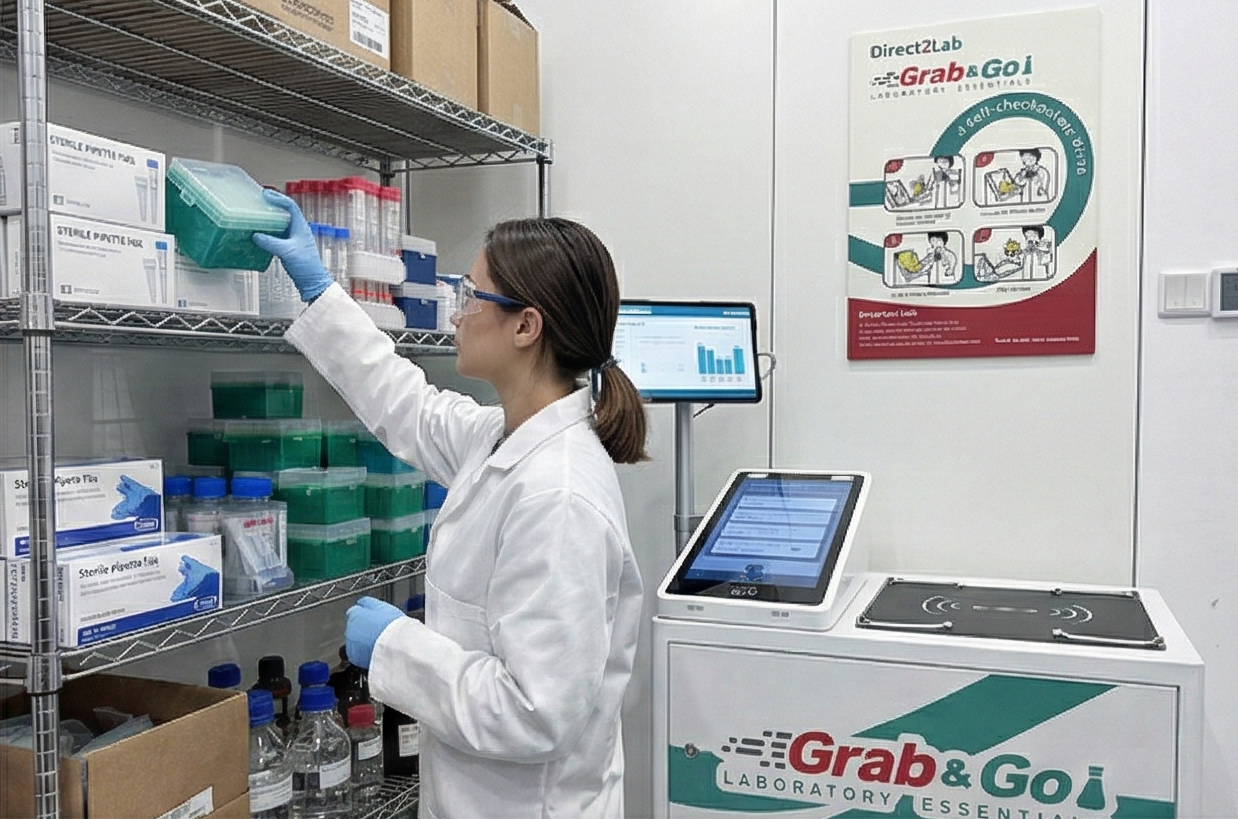
Grab & Go™ Kiosk
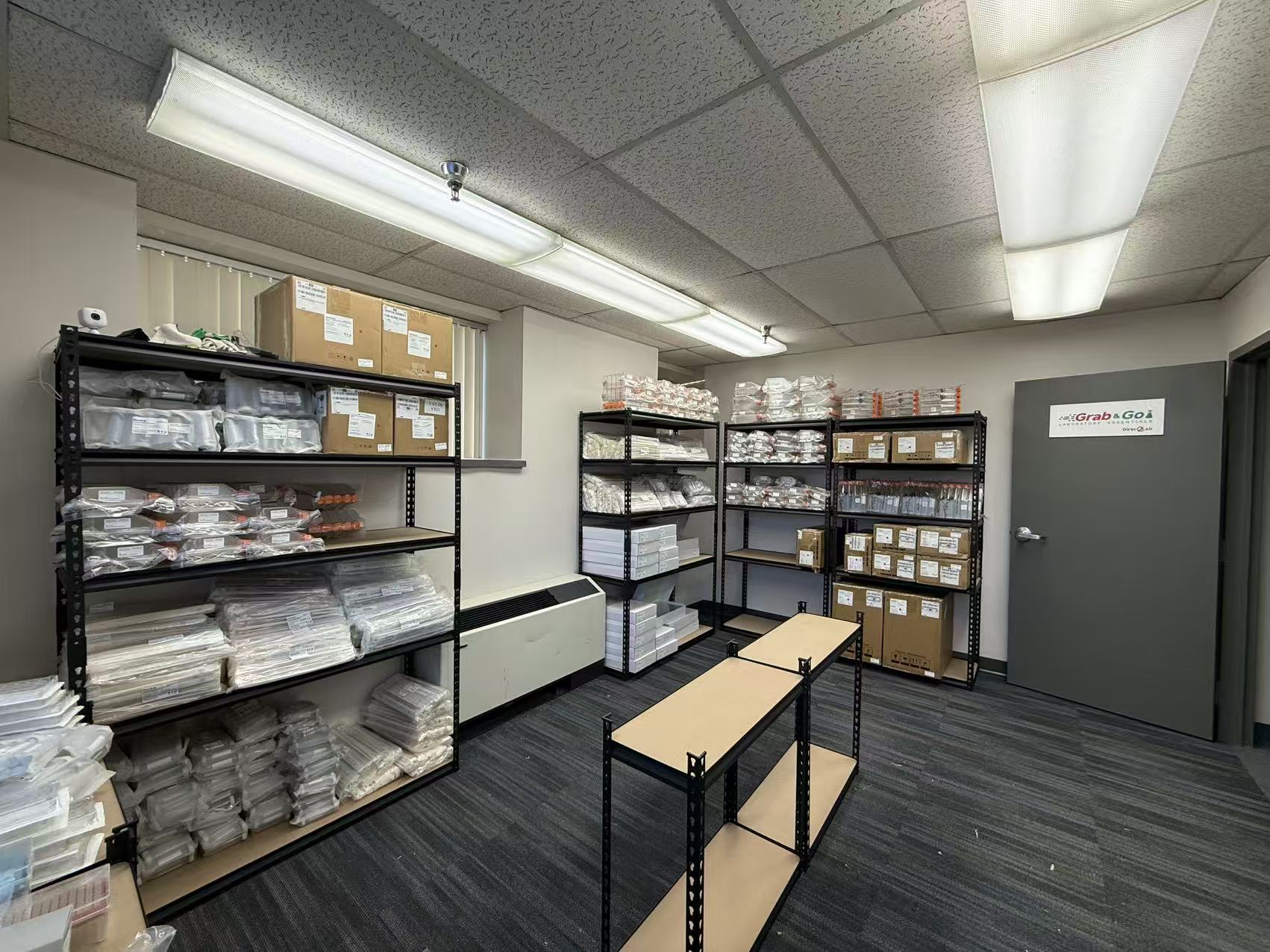
Located inside UMBC’s bwtech@UMBC Research & Technology Park in Maryland.
bwtech South
1450 South Rolling Road
Halethorpe, MD 21227
(410)455-5900
Coming soon....Our team is onboarding a few more locations. Stay tuned! You can also apply your own location below.
Coming soon....Our team is onboarding a few more locations. Stay tuned! You can also apply your own location below.
Blogs

How to Choose the Right PCR Plate for qPCR Sensitivity and Uniformity
Table of Contents Why PCR Plate Design Directly Impacts qPCR Sensitivity Thermal Uniformity: The Most Overlooked Source of qPCR Error Optical Considerations When Selecting PCR Plates Mechanical and Material Factors Affecting Data Quality Choosing the Right PCR Plate for Your qPCR Application Evaluating a PCR Plate Supplier References qPCR accuracy depends on multiple variables, yet one of the most influential, and often underestimated, is the PCR plate itself. Research teams routinely optimize mastermixes and primer design while assuming the consumables are inert. In practice, the choice of a PCR plate for qPCR directly affects sensitivity, uniformity, and fluorescence accuracy. Across several molecular labs we’ve supported, identical samples have produced 0.5–1.2 cycle variation depending on the plate’s thermal transfer efficiency and optical properties. These discrepancies reveal how much the physical construction of a white 96-well PCR plate, or any thin-wall plate, can alter amplification outcomes. Selecting the right plate is not a procurement detail; it is a foundational aspect of achieving reliable qPCR results. Why PCR Plate Design Directly Impacts qPCR Sensitivity 1. How plate wall thickness affects heat transfer and Ct consistency Thin-wall PCR plates were engineered to improve PCR plate heat transfer, allowing reagents to track thermal transitions precisely. However, if wall thickness varies across wells, thermal gradients form across the block. These gradients reduce efficiency and distort Ct values. Experience signal: Viral load screening labs reported that outer-well Ct inflation consistently aligned with uneven wall thickness, not reagent quality. Expertise signal: Suboptimal heat transfer can lower amplification efficiency (E < 1.85), leading to measurable Ct drift across replicates. Including the keyword thin-wall PCR plate allows us to highlight why thin-wall construction is preferred for tight thermal tracking. 2. Optical path interactions in fluorescence-based qPCR detection qPCR detection relies on controlled excitation and emission pathways. When the bottom surface of a PCR plate lacks optical consistency, fluorescence can scatter, reducing qPCR sensitivity and complicating quantification. High-clarity bottoms can over-scatter light, while frosted or semi-transparent designs stabilize the optical path. The selected PCR plate for fluorescence assays must maintain uniform optical thickness to avoid channel bleed-through in multiplex reactions. Authority signal: Instrument manufacturers specify bottom-thickness tolerances to prevent optical misalignment.Trust signal: Labs frequently request optical uniformity data before validating a new plate supplier. 3. Why plate color influences background noise and signal strength A white PCR plate enhances qPCR sensitivity by reflecting emitted light toward the detector, reducing background noise. In low-copy assays, this improvement can be essential for late-cycle detection. Expertise signal: Depending on the system, white plates can increase SNR by 20–40%, directly impacting PCR plate sensitivity.Experience signal: Labs performing low-copy viral detection consistently report tighter replicates with white plates compared to clear plates. Thermal Uniformity: The Most Overlooked Source of qPCR Error 1. How uneven heating alters amplification efficiency Even a 0.3°C shift in annealing or extension temperature can suppress amplification efficiency, distort melt curves, and weaken detection signals. A high-quality 96-well PCR plate reduces these variations by ensuring stable thermal contact. 2. Plate-to-block contact and why flatness matters Plates with poor rigidity or inconsistent skirt geometry bow during cycling, lifting wells away from the block. Once thermal contact is compromised, Ct variability increases immediately. Authority signal: GMP workflows emphasize plate flatness because thermal transfer inconsistency is a known risk factor in diagnostic qPCR. 3. Symptoms of poor thermal uniformity Edge-well Ct drift High replicate variability Distorted melt curves False low-abundance readings These patterns often trace back to plate mechanics rather than chemistry. Optical Considerations When Selecting PCR Plates 1. White vs clear vs frosted plates for fluorescence detection White PCR plates: Highest SNR; ideal for weak targets Clear plates: Visual monitoring but higher scatter Frosted plates: Reduce stray light in high-sensitivity assays Expertise signal: Optical path stability is essential for consistent read-height calibration and accurate fluorescence measurement. 2. Reflective surfaces and signal consistency Reflective wells increase signal return, enhancing qPCR uniformity. This is particularly valuable for assays relying on faint probe emissions. 3. Bottom uniformity and its impact on read height qPCR instruments depend on consistent bottom thickness. Deviations as small as 150 μm can misalign the optical head and reduce detection accuracy. Authority signal: Many instrument vendors specify permissible tolerances for PCR plate uniformity. Mechanical and Material Factors Affecting Data Quality 1. Plate rigidity and risk of warping Warped plates lose contact with the thermal block, directly reducing qPCR efficiency and contributing to Ct variability. 2. Skirted vs semi-skirted vs non-skirted plates Skirted: Most stable; best for automationSemi-skirted: Balanced rigidity and compatibilityNon-skirted: Flexible but more prone to warping 3. Adhesive films vs optical seals Optical seals ensure cleaner fluorescence signals. Some adhesive films emit low-level autofluorescence, increasing the background. Trust signal: Labs often request seal compatibility data before switching consumables. Choosing the Right PCR Plate for Your qPCR Application 1. High-sensitivity assays White, thin-wall PCR plates for qPCR improve late-cycle detection and reduce replicate spread. 2. Multiplex assays Channel bleed-through is minimized when plates have consistent optical and material properties. 3. Instrument compatibility Different qPCR systems require specific plate geometries and optical thickness ranges. Authoritativeness signal: Many labs validate plates against multiple instruments before onboarding them for regulated workflows. Evaluating a PCR Plate Supplier 1. Lot-to-lot consistency and documentation Labs expect suppliers to provide: COC/COA Optical uniformity datasets Thermal mapping results 2. Supplier-run performance testing Leading suppliers measure both reflectivity and thermal profile across plates to ensure predictable performance. 3. Why do some labs choose validated white PCR plates Teams optimizing fluorescence sensitivity often prefer suppliers who provide documented PCR plate uniformity and optical QC. D2Lab offers white PCR plates validated for signal consistency, though the evaluation principles above apply to any high-quality supplier. Explore Validated PCR Plates for High-Sensitivity qPCR If your workflow requires consistent thermal transfer and reliable fluorescence performance, you can review the specifications of our validated white 96-well PCR plate here: View the 96-Well PCR Plate → References PCR/qPCR Plastics Troubleshooting Guide – Thermo Fisher Scientific Thermo Scientific PCR Plastics Selection Guide Five Things to Consider Before Buying Your Next PCR Plate – Bio-Rad Bulletin 3484 Effects of Plate Position, Plate Type, and Sealing Systems on Real-Time PCR Results – Reiter & Pfaffl (2008)

Where to Buy Reliable PCR Plates for qPCR and Fluorescence Assays
Table of Contents What Labs Look for When Buying PCR Plates Common Problems With Low-Quality PCR Plates What Makes a PCR Plate Reliable Why Many Labs Prefer Direct2Lab Where to Buy High-Quality PCR Plates How to Evaluate Supplier Quality Summary: Why Direct2Lab Is a Reliable Source Selecting a PCR plate is rarely treated as a procurement decision with scientific implications, but it should be. Labs running qPCR, high-sensitivity fluorescence assays, or regulated workflows depend on plasticware that delivers predictable thermal transfer, optical stability, and lot-to-lot consistency. When any of these variables fail, even well-designed assays can show Ct drift, increased noise, or inconsistent quantification. Across molecular diagnostic teams, CRO platforms, and academic cores, one of the most common questions we hear is simple: “Where can we buy PCR plates we can trust?” For many labs, reliability is not just about performance; it’s about supply continuity, validated QC data, and knowing the consumables they receive next quarter will behave exactly like the ones they validated today. What Labs Look for When Buying PCR Plates 1. Color: White PCR plates for higher fluorescence sensitivity White wells improve the signal-to-noise ratio by reflecting emitted fluorescence toward the detector. Labs handling low-copy targets or late-cycle amplification typically report tighter replicate clustering with white plates than with clear plates. 2. Thin-wall construction for rapid thermal transfer Thin-wall PCR plates reduce thermal lag, allowing reactions to match programmed temperature transitions more precisely. This becomes essential in qPCR assays where minor thermal deviations translate into measurable Ct variability. 3. Optical uniformity required for qPCR reproducibility A reliable PCR plate maintains consistent bottom thickness, clarity, and reflective properties. Any deviation increases stray light, compromises calibration, and impacts fluorescence intensity. Common Problems With Low-Quality PCR Plates 1. Inconsistent Ct values caused by poor heat transfer Uneven wall thickness or warped plates distort heat distribution across the thermal block. Teams often misattribute this to reagent variability when it is actually a consumables issue. 2. Warping or plate deformation during thermal cycling Low-grade plastics or inconsistent skirt geometry can cause plates to bow under heat. Once wells lift from the block surface, thermal accuracy is lost instantly. 3. Fluorescence scatter from low-grade plastics Plates produced without optical QC frequently exhibit uneven translucency or scattering defects, which lead to unstable fluorescence readings. What Makes a PCR Plate “Reliable” for High-Sensitivity Assays 1. Validated thermal uniformity and flatness across wells Reliable plates maintain full contact with the thermal block throughout all cycles. Vendors that perform plate-mapping or flatness measurements give labs higher confidence in reproducibility. 2. Reflective white wells for improved signal-to-noise ratio High-quality white PCR plates increase effective fluorescence capture—especially important for targets detected late in the amplification curve. 3. COA, COC, and supplier QC data availability Labs increasingly require documentation confirming optical thickness, reflectivity, and material uniformity. A reliable supplier provides transparent QC data for every production lot. Why Many Labs Prefer Direct2Lab for PCR Plates 1. Direct2Lab’s validated white 96 well plate design Direct2Lab PCR plates are engineered for high-sensitivity qPCR workflows, featuring thin-wall polypropylene for rapid thermal transfer, uniform well geometry, and reflective white optics optimized for fluorescence detection. Validation includes mapping fluorescence uniformity and checking well-to-well thermal consistency. 2. Optical QC, lot-to-lot consistency, and fluorescence mapping Each production batch undergoes optical thickness checks and reflectivity profiling. This reduces the risk of Ct drift when switching lots—one of the primary concerns in regulated and high-throughput environments. 3. Supply reliability: Grab&Go Smart Pantries + 3-day E-Shop delivery Direct2Lab improves supply reliability with two integrated delivery models: Grab&Go Smart Pantries: RFID-enabled on-site restocking E-Shop: No MOQ, 3-day delivery, small-batch ordering Where to Buy High-Quality PCR Plates (D2Lab Purchase Paths) 1. Direct2Lab E-Shop: No MOQ + fast delivery The easiest way for labs to purchase validated PCR plates without long-term contracts. Transparent pricing and rapid fulfillment support both everyday use and validation work. 2. Grab&Go Smart Pantries for automated on-site restocking Ideal for high-volume or clinically oriented labs requiring uninterrupted supply. RFID automation tracks usage and replenishes stock automatically. 3. Direct link: D2Lab’s 96-well PCR plate Product page: View the 96-Well PCR Plate → How to Evaluate Whether a Supplier Meets Your Lab’s Standards 1. Optical thickness and reflectivity testing Reliable suppliers can provide mean and variance measurements for optical thickness—critical for fluorescence consistency. 2. Thermal mapping and flatness documentation Suppliers offering block-mapping or plate flatness data provide labs with better predictability and easier validation. 3. Regulated workflow considerations (GMP, CLIA, ISO) Labs operating in controlled environments require consumables that won’t introduce variability during audits or proficiency testing. Summary: What Makes Direct2Lab a Reliable PCR Plate Source Labs choose Direct2Lab because the platform combines validated consumable performance, documented QC, and dependable logistics. With thin-wall construction, reflective white optics, and tight lot-to-lot consistency, Direct2Lab’s PCR plates are engineered to support sensitive qPCR and fluorescence assays. For teams that value accuracy and uninterrupted supply, Direct2Lab provides both the product reliability and delivery infrastructure required to maintain high-quality workflows. Order Validated PCR Plates for qPCR and Fluorescence Review specifications and purchase directly from the product page below: Shop the 96-Well PCR Plate →
How Bulk Purchasing Laboratory Supplies Reduces Cost Without Compromise
Managing laboratory consumables is often where finance and science collide. On paper, bulk purchasing looks like an easy way to cut costs. Unit prices drop, quotes show impressive percentage discounts, and it feels safer to “stock up” so that no one runs out of tips or tubes at a critical moment. In practice, many labs discover a different reality. Shelves fill with boxes of plastics that will not be used for months, while the items that actually move fastest still go out of stock at the worst possible time. Expired inventory, rushed emergency orders, and fragmented vendor lists quietly erode whatever savings were promised. For operations leaders and principal investigators, the real question is not simply whether bulk purchasing is good or bad. The real question is when larger volume commitments genuinely reduce total cost per experiment and when they simply shift cost into storage, waste, or risk. This guide breaks down the cost drivers behind lab consumables, explains where bulk purchasing creates real value, and highlights the situations where it can backfire. It then outlines a hybrid approach that combines the economics of volume with the flexibility of just-in-time access, and explains how a partner like Direct2Lab can support that model without forcing you into oversized, one-time orders. Why Labs Consider Bulk Purchasing in the First Place Most labs start exploring bulk purchasing for perfectly rational reasons. • Pressure to reduce unit priceFinance teams see a growing consumables line item and look for volume discounts. Vendor quotes often show meaningful price breaks at case, pallet, or annual-commitment levels, which makes bulk buying look like pure savings. • Administrative fatigue from frequent small ordersEvery small order still carries the same approval, PO creation, receiving, and invoice processing steps. In many institutions, the administrative cost of processing an order can rival the value of the items on it. Reducing order frequency feels like a direct productivity win for lab managers and administrators. • Fear of stockouts on critical itemsStockouts on apparently simple items like tips, tubes, or seals can halt experiments, delay deliverables, and undermine confidence in lab operations. Overordering “just in case” is often seen as the safer choice, especially after a bad stockout experience. Viewed from this angle, bulk purchasing is not an irrational habit. It is a risk management and cost-control tactic. The problem is that unit price is only one piece of the total cost equation. The Real Cost Drivers Behind Lab Consumables Unit Price vs Total Cost per Experiment A lower unit price is attractive, but it is not the same as lowering cost per experiment. Total cost per experiment includes: • The consumables actually used• Waste from expired, damaged, or obsolete stock• Extra steps added to workflows when staff must “work around” stockouts or compatibility mismatches If you buy a year’s worth of a particular tube to get a discount but later change centrifuge rotors or protocols, part of that inventory can no longer be used as originally planned. The apparent savings on paper turn into sunk cost. Ordering and Receiving Overhead Every order consumes administrative time: • Creating and approving requisitions• Checking quotes and contracts• Receiving, checking, and shelving deliveries• Processing and reconciling invoices Bulk purchasing can reduce the number of orders, but only if the lab truly stabilizes around a limited set of core SKUs. If the lab continues to place many small orders for other items, a one-time bulk buy on a single product does not materially reduce overhead. Stockouts, Rush Orders, and Downtime On the other side of the spectrum, under-ordering leads to stockouts. Downtime during critical experiments or time-sensitive projects often requires: • Rush shipping fees• Substitutions that may not be validated• Lost time for staff who must rearrange schedules or re-run experiments These costs rarely appear as a line item in procurement systems, but they are very real to teams under timeline pressure. When Bulk Purchasing Actually Saves Money Despite the risks, bulk purchasing can be very effective under the right conditions. The key is to understand where volume commitments align with real, predictable demand. Stable, High-Volume Workflows Bulk purchasing works best for consumables that feed high-volume, stable workflows: • Routine cell culture• Standard molecular assays• Clinical or diagnostic runs with predictable weekly volumes If a lab runs the same protocols at roughly the same scale week after week, historical usage data can reliably predict future demand. In that case, buying core items like pipette tips, 15 mL tubes, plates, or culture flasks in bulk at negotiated pricing can genuinely lower total cost per experiment. Standardized Assays and Platforms When a lab standardizes on a particular assay kit, plate format, or automation platform, the risk of rapid spec changes is lower. For example: • A validated qPCR platform that will stay in use for years• A defined ELISA panel with locked-in procedures• A sterilization method that does not change container requirements In these contexts, the risk that a bulk-purchased consumable will become obsolete mid-stream is smaller. The lab can safely translate unit-price discounts into genuine savings. Negotiated Pricing on Core SKUs The most sustainable form of “bulk discount” is not a single giant order. It is a negotiated price on a realistic annual volume for a narrow set of SKUs, combined with flexible drawdown over time. Instead of buying ten cases of the same tip in January, a lab negotiates a price based on expected annual usage and draws those tips as needed. The vendor can plan production and inventory accordingly, while the lab protects cash flow and storage space. This is where a flexible supply partner becomes more valuable than a one-time promotion. Risks of Bulk Buying: Hidden Waste and Obsolescence Bulk purchasing becomes dangerous when it ignores how quickly scientific needs change. Expiry, Specification Changes, and Version Drift Many consumables have meaningful shelf-life, packaging, or spec-change risks: • Sterile items with expiration dates• Plastic formulations that change under new regulatory or sustainability requirements• Incremental “version upgrades” of assays or instruments that require different plates, tubes, or seals If you buy years of supply at once, you may be locking yourself into an old spec while protocols evolve. This can create tension between lab and QA/QA or force the lab to use up an inventory that is technically valid but not fully aligned with best practice. Storage Space and Handling Cost Every extra case of consumables consumes: • Shelf or cold-room space• Time to move, count, and reconcile• Risk of damage or misplacement In many labs, space is already a constraint. When storage areas are packed with low-velocity stock, it becomes harder to keep high-velocity, mission-critical items visible and easy to access. Staff spend more time searching, and inventory counts become less reliable. Tying Up Budget in the Wrong Inventory Overbuying a small number of SKUs often means there is less budget available for: • New assay development• Piloting alternative formats or brands• Investing in higher-impact infrastructure In early-stage or grant-funded labs, tying up budget in slow-moving consumables can be particularly damaging. It reduces the flexibility to adapt when projects shift or new collaborations arise. A Smarter Model: Hybrid Bulk and Just-in-Time Supply The most resilient labs rarely rely on pure bulk or pure just-in-time. They use a hybrid model that separates true “core volume” from “long-tail” or experimental items. Bulk on Core, Flexible on the Long Tail In a hybrid model: • Core, validated items with steady demand are covered by volume-friendly pricing and predictable replenishment.• Long-tail, exploratory, or low-volume items are ordered in smaller quantities as needed, even if the unit price is slightly higher. This keeps shelves from being dominated by slow-moving stock while still capturing real savings on the everyday basics. Using Usage Data to Right-Size Reorders The key enabler is data. Instead of guessing, labs track: • Monthly consumption for each core SKU• Variability across project phases• The lead times and minimum order quantities required by suppliers With even six to twelve months of usage history, it becomes much easier to set realistic reorder points and volumes. Forecasting does not need to be perfect; it just needs to be good enough to avoid both chronic overstock and chronic stockouts. Leveraging Vendor Programs Instead of Owning Every Box Rather than trying to own all future inventory upfront, labs can partner with vendors who: • Hold buffer stock on their side• Allow flexible drawdown against volume commitments• Offer local or on-site solutions for emergency access In this model, the lab is paying for availability plus volume economics, not for the risk and handling cost of storing every case in-house. How Direct2Lab Helps Labs Capture Bulk Savings Without the Trade-offs Direct2Lab is built around exactly this hybrid logic: labs should enjoy the pricing and stability benefits of volume without being forced into rigid, oversized orders that sit on the shelf. Consolidated Sourcing for Everyday Consumables By consolidating tips, tubes, plates, labels, and other essentials into a single supply platform, Direct2Lab helps labs: • Reduce the number of vendors and POs• Negotiate pricing across a meaningful basket of core SKUs• Simplify quality documentation and change control Instead of chasing marginal discounts from multiple distributors, operations teams can redirect time into higher-value tasks. Volume Pricing Without One-Time Mega Orders Through Direct2Lab’s eShop and account-level pricing, labs can access volume-friendly pricing on core items while ordering in sane quantities. This means: • You do not need to buy a year’s worth of a consumable in a single shipment to unlock better pricing.• You can align replenishment with real usage and storage constraints.• Cash flow is preserved, and budget remains available for new projects. When usage patterns change, Direct2Lab can adjust the mix of SKUs and volumes without leaving you locked into obsolete stock. Grab & Go and eShop Working Together For labs on campuses or sites where Direct2Lab’s Grab & Go smart stock solution is available, the hybrid model becomes even clearer: • On-site Grab & Go cabinets provide just-in-time access to critical items, preventing stockouts without requiring you to hold a large emergency buffer in your own storeroom.• The eShop supports planned purchasing and bulk-friendly replenishment for broader categories and larger volumes. Together, they create a feedback loop: data from Grab & Go usage informs which items truly behave as “core volume,” and that data can guide eShop ordering and pricing commitments. Practical Checklist Before You Commit to a Bulk Purchase Before approving a large volume order on any consumable, lab managers and PIs can run through a simple checklist: Is the workflow using this item stable for at least the next 6–12 months?If major protocol, instrument, or regulatory changes are likely, be conservative. Do we have at least six months of usage data?Even approximate numbers (per month, per team, per instrument) are better than gut feel. What is the real shelf-life and change-control risk?Consider expiration dates, packaging changes, and supplier version updates. Where will we store this inventory, and who maintains it?Confirm that storage space, environmental conditions, and cycle counts are adequate. What happens if demand drops by 30–50 percent?Think about alternative uses, transfer to other labs, or buy-back options. Is there a vendor program that offers similar pricing with staged deliveries or on-site stock?If yes, a hybrid approach is often safer than a single mega order. How does this decision align with our overall consumables strategy?Bulk buys should serve the strategy, not replace it. Bringing It Back to Your Lab Bulk purchasing is neither a silver bullet nor a trap by definition. It is a tool. Used without data, it creates waste and locks up budget in the wrong places. Used with discipline and paired with flexible, just-in-time access, it can materially reduce the cost and stress of running a modern lab. If your team is rethinking how you purchase lab consumables, consider where bulk commitments make real sense, where flexibility matters more, and how your current distributor relationships support – or limit – that balance. Direct2Lab was built to help labs move away from one-size-fits-all bulk deals and toward a model that combines smart sourcing, volume economics, and practical on-site access. When you are ready to explore a hybrid approach for your lab or campus, our team can help you map existing usage, identify core SKUs, and design a purchasing plan that reduces cost without compromising quality, compliance, or agility.


